

Higher peaks,lower heat.
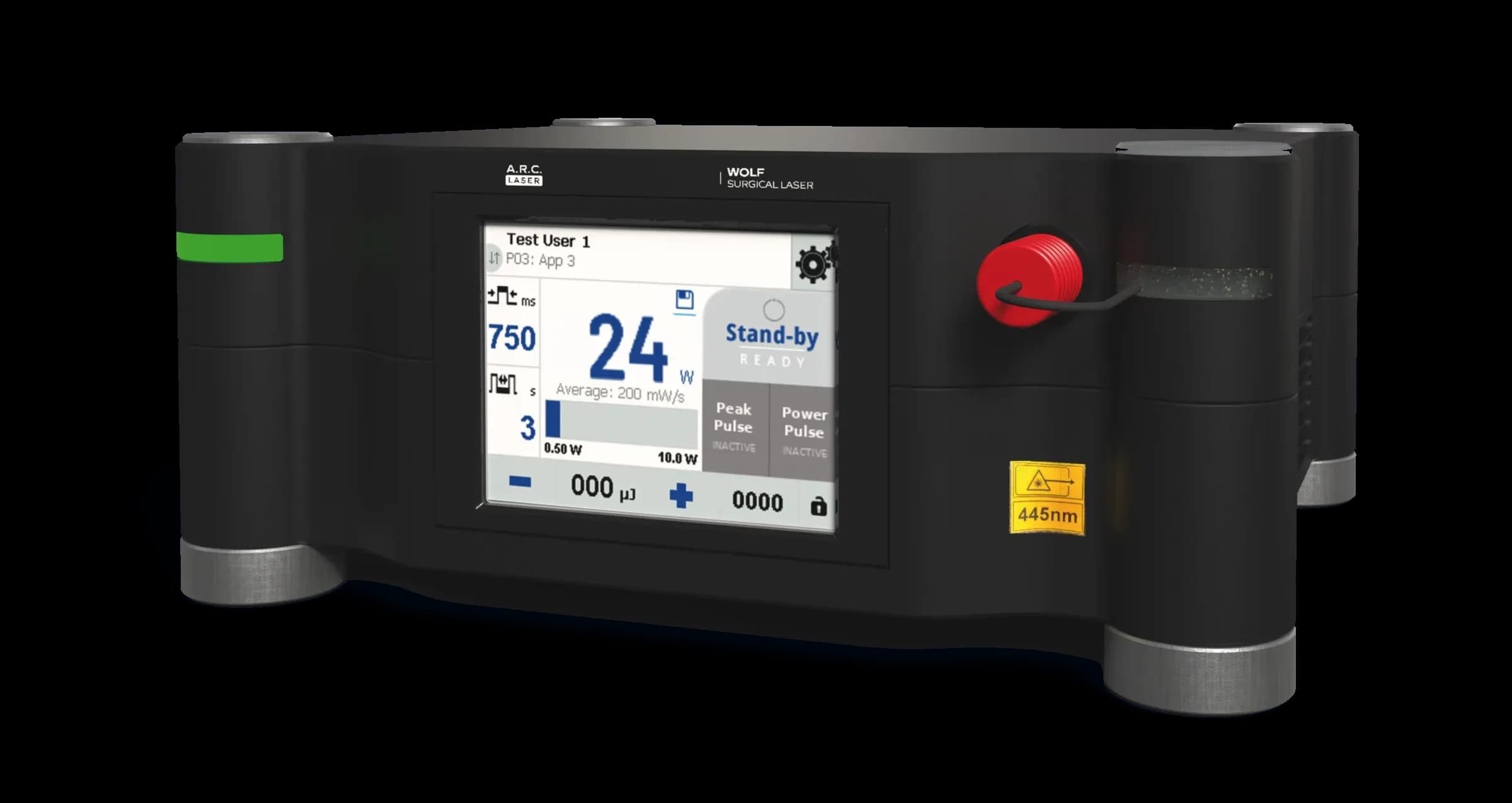
PentaPulse™ gives the Wolf TruBlue two new pulsed modes, with peaks of up to 24 W and less heat spread into surrounding tissue.
- 30+ years designing and perfecting lasers
- 40+ peer-reviewed clinical publications
- 50+ countries where the Wolf TruBlue is sold
What is PentaPulse?
PentaPulse™ is a new operating system that gives the Wolf TruBlue the ability to function in two new pulsed modes, producing higher peak power and lower heat accumulation in the tissue.

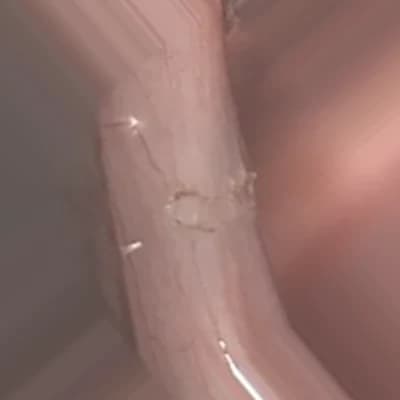
- Less char
- Good hemostasis
- Targeted blanching
- Precise cutting*
PeakPulse™: for a fine, precise incision
PeakPulse delivers short, high-powered micropulses for a fine, precise incision. Surgeons get impressive cutting at up to 24 W peak. The tissue cools between micropulses, so less heat spreads into the surrounding area, which means less char and a cleaner field. And because 445 nm is strongly absorbed by hemoglobin, PeakPulse provides hemostasis as it cuts.
- Micropulse duration
- 100 µs
- Peak power
- 24 W
PowerPulse™: for coagulation and hemostasis
PowerPulse delivers longer pulses of 5 to 20 ms at up to 16 W peak, repeated at 1 to 10 Hz, for controlled, targeted coagulation and hemostasis. Surgeons report that vessels blanch more immediately, with less char than in standard settings. They also describe the tissue effect as closer to what they are used to with KTP.
- Pulse duration
- 5, 10, 15 or 20 ms
- Peak power
- 16 W
- Frequency
- 1 to 10 Hz
See PentaPulse in surgery
Watch Dr. Hess and Dr. Rosow use the Wolf TruBlue with PentaPulse in laryngeal surgery.
Why we’re excited about pulsing
Pulsed delivery has been studied for decades as a way to limit thermal injury, and PentaPulse gives surgeons more ways to use it.
Less heat spread1–3
Cooling time between short pulses keeps heat near the target, with a narrower zone of thermal damage than continuous wave.
Less char4
In a vocal fold study, carbonization was more pronounced with continuous wave than with pulsed delivery.
More control
Pulsed settings let surgeons set peak power and pulse timing separately from the average power.
Upgrade over the holidays

Upgrade over the holidays
If your Wolf TruBlue was made on or after 1 January 2020, it can be upgraded to PentaPulse at A.R.C. in Nuremberg.
The upgrade takes a few hours on the bench: the new software is installed, the diode is aligned and the laser is recalibrated to the maximum its diode supports. The holidays, when surgery lists are lighter, are the best time to do it.
16 Dec13 Jan
11 Jan29 Jan
1st slot: your laser arrives at A.R.C. by 16 December and is ready to ship back by 13 January.
2nd slot: your laser arrives at A.R.C. by 11 January and is ready to ship back by 29 January.
Each slot is limited to about 7 lasers, 14 in total, and places are given on a first come, first served basis.
Looking for a new laser?
Every new Wolf TruBlue comes with PentaPulse. If you own a TruBlue made before 2020, trade it in for 15% off a new system.
The origin ofblue laser surgery in ENT
When A.R.C. introduced the first blue laser in ENT, the TruBlue platform, it established a new approach to a problem that defined ENT laser surgery for decades: no single laser could cut precisely and coagulate effectively at the same time.
At 445 nm the Wolf TruBlue sits on the deoxyhemoglobin absorption band, near its peak at 430 nm. Deoxygenated hemoglobin absorbs six to eight times more strongly here than at 455 nm or KTP (532 nm); for oxyhemoglobin the margin is about 1.5 to 1.8 times.
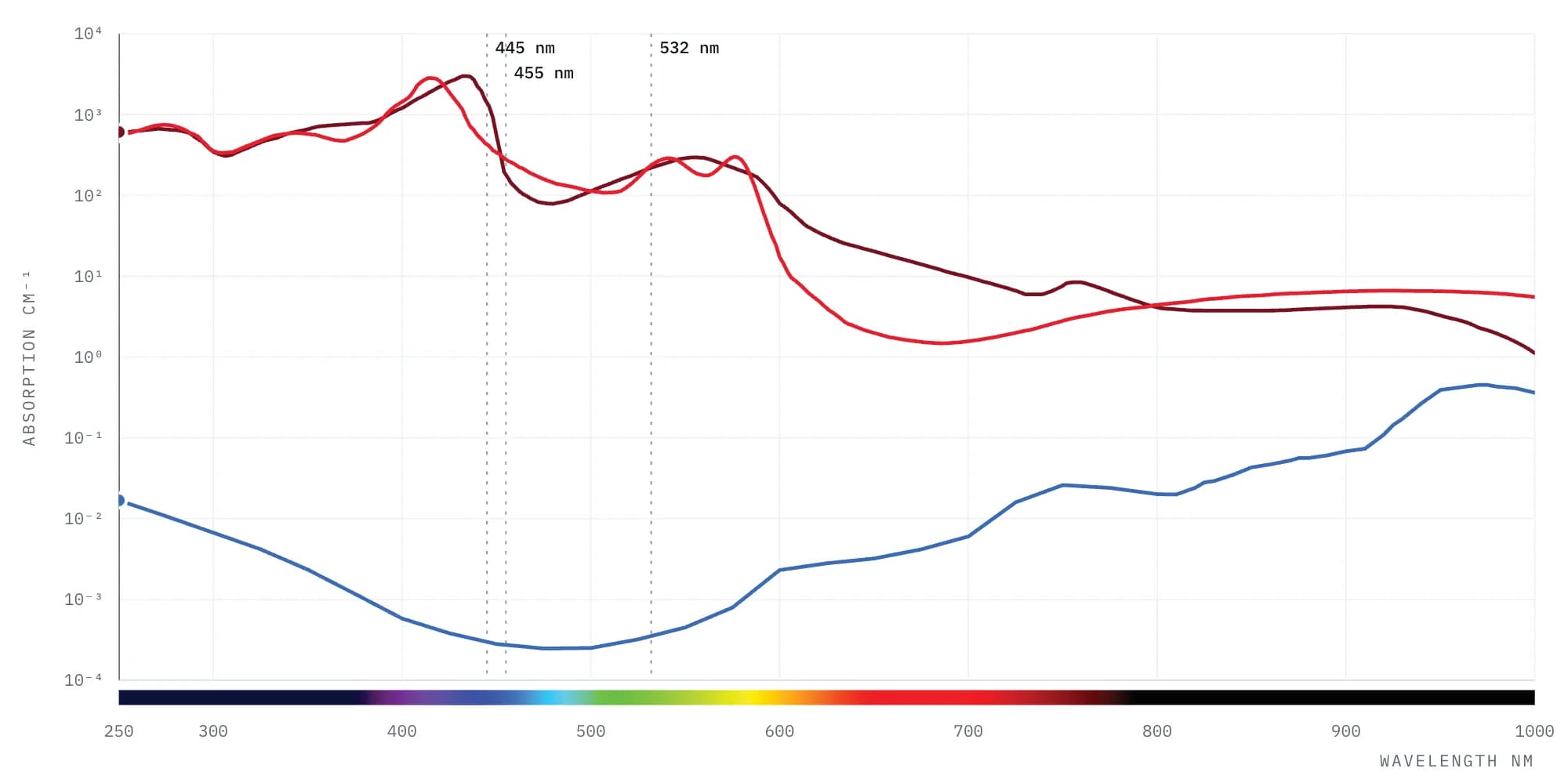
This higher absorption enables greater localized energy density within vascular tissue, “producing CO2-like non-contact cutting with simultaneous photoangiolytic coagulation” (Hess, 2018).
Validated by science,proven in practice
With almost a decade of clinical use, TruBlue has been studied across multiple surgical specialties, producing a robust body of peer-reviewed literature that has established blue lasers as a valuable tool in ENT.
Close and clean margins
The Wolf TruBlue laser can be used to vaporize Tis, T1 and T2 glottic cancer tumors with close margins while preserving outcomes (Rosow, 2024).
Superior tissue selectivity
445 nm offers high hemoglobin absorption with minimal thermal spread, reducing the risk of scarring and preserving the vibratory layer (Balouch, 2023).
Visibility with a drier field
The favorable absorption properties of 445 nm let surgeons gain visibility and control bleeding (González-Herranz, 2023).
Minimal collateral damage
For vascular lesions, the touch or very-near-touch technique allows effective coagulation of the vessel with virtually no thermal effect on the adjacent epithelium (Sataloff, 2021).
Reduced scarring
A significant increase in fibrosis in the vocal folds after treatment with a KTP laser, and no evidence of this with the Wolf TruBlue (Lin, 2020).
Four specialties, one system
Laryngology and voice
- vocal fold cysts, nodules and polyps
- Reinke’s edema
- varices and ectasias
- recurrent respiratory papillomatosis (RRP)
- subglottic and tracheal stenosis
- airway granulomas
Otology
- stapedotomy and stapedectomy
- middle ear cholesteatoma removal
- tympanosclerosis excision
- granulation tissue removal
- tumor excision in the ear canal or middle ear
- hemostasis during mastoid surgery
Rhinology
- epistaxis
- HHT/ORW/Osler
- turbinates
- septumplasty
- DCR
Head and neck
- early glottic carcinoma (Tis, T1, T2)
- transoral flexible laser surgery of the upper aerodigestive tract
- leukoplakia and dysplasia
Everything you needfor every case
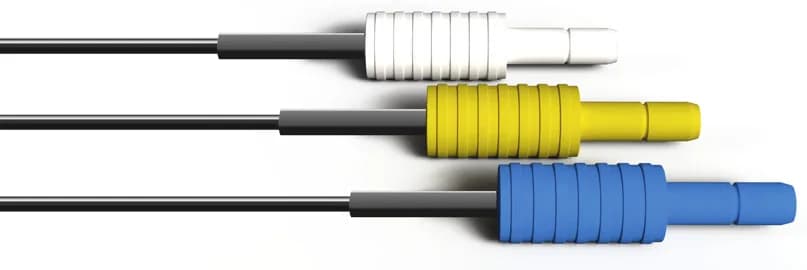
HiFlex fibers
color-coded in 300, 400 and 600 µm diameters; light, durable and flexible
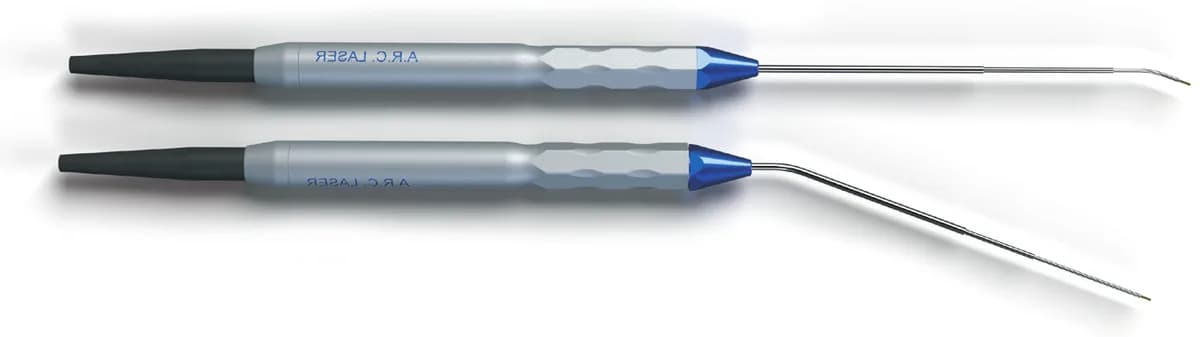
Otology probes
an integrated handpiece in two tip configurations, housing a 300 µm silicate fiber


Surgical handpieces and DCR probe
low profile, robust and reusable, with straight or bent tips in adult and pediatric lengths; the DCR probe is double cannulated for fiber and suction
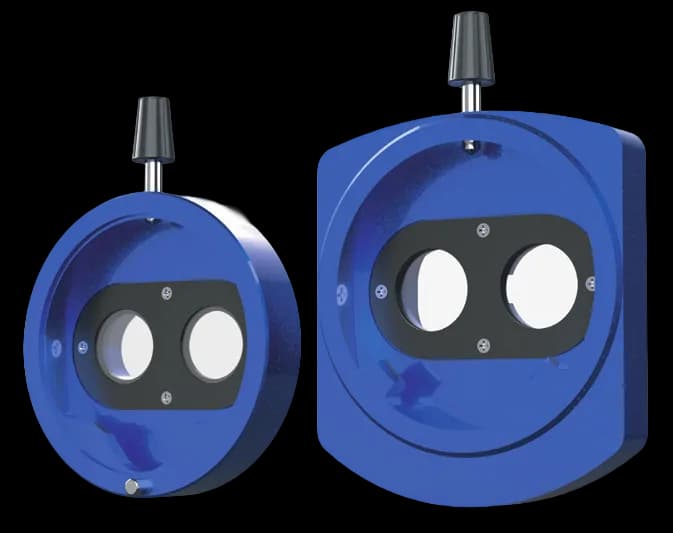
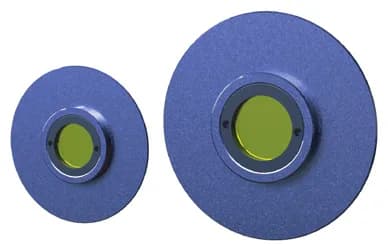
Microscope and endoscope filters
safe, constant viewing matched to the wavelength
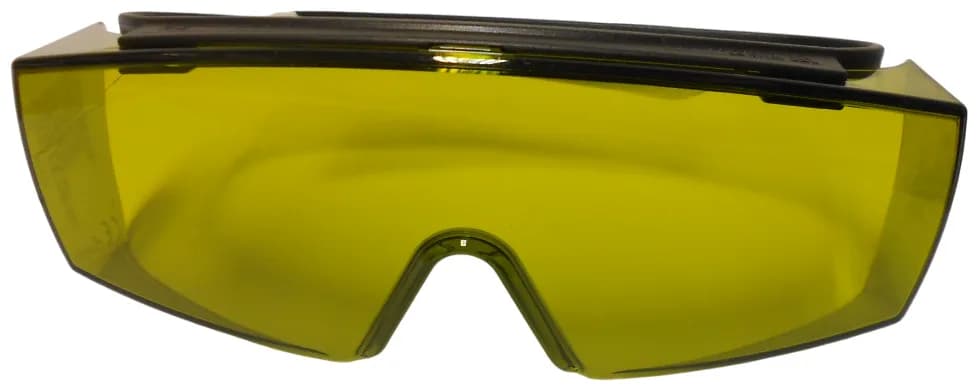
Goggles
lightweight, with excellent clarity and full optical protection
* Glottoplasty case: PeakPulse (right) and a standard pulsed setting (left) at the same average power.
- Anderson RR, Parrish JA. Selective photothermolysis: precise microsurgery by selective absorption of pulsed radiation. Science. 1983;220:524–527.
- Walsh JT Jr, Flotte TJ, Anderson RR, Deutsch TF. Pulsed CO2 laser tissue ablation: effect of tissue type and pulse duration on thermal damage. Lasers Surg Med. 1988;8(2):108–118.
- Arroyo-Ramos HH, Neri L, Mancini MW, et al. Effects of diode laser setting for laryngeal surgery in a rabbit model. Eur Arch Otorhinolaryngol. 2019;276(5):1431–1438.
- Li X, Li J, Cui X, et al. The thermal damage of canine vocal fold by CO2 laser under different laser emission mode. Ear Nose Throat J. 2022;101(2 Suppl):17S–23S.
Hemoglobin data: S. Prahl, “Tabulated molar extinction coefficient for hemoglobin in water,” Oregon Medical Laser Center (1998), compiled from data of W. B. Gratzer and N. Kollias, omlc.org/spectra/hemoglobin/summary.html. Shown as absorption coefficients at 150 g Hb per litre; 445 and 455 nm interpolated between tabulated points. Water data: G. M. Hale and M. R. Querry, Applied Optics 12, 555–563 (1973).
Upgrade return dates apply if the upgrade runs smoothly and the laser is within the appropriate power limits. If a laser needs additional service, the partner sends a quote for the service costs first, and the schedule is then not guaranteed.
24 W PeakPulse and 16 W PowerPulse on new systems. Upgraded lasers are recalibrated to the maximum their diode supports. Upgrade availability depends on registration in your country.
Manufactured by A.R.C. Laser GmbH, Bessemerstraße 14, 90411 Nuremberg, Germany.